Science & Research
A lifelong arc: curiosity → rigor → impact
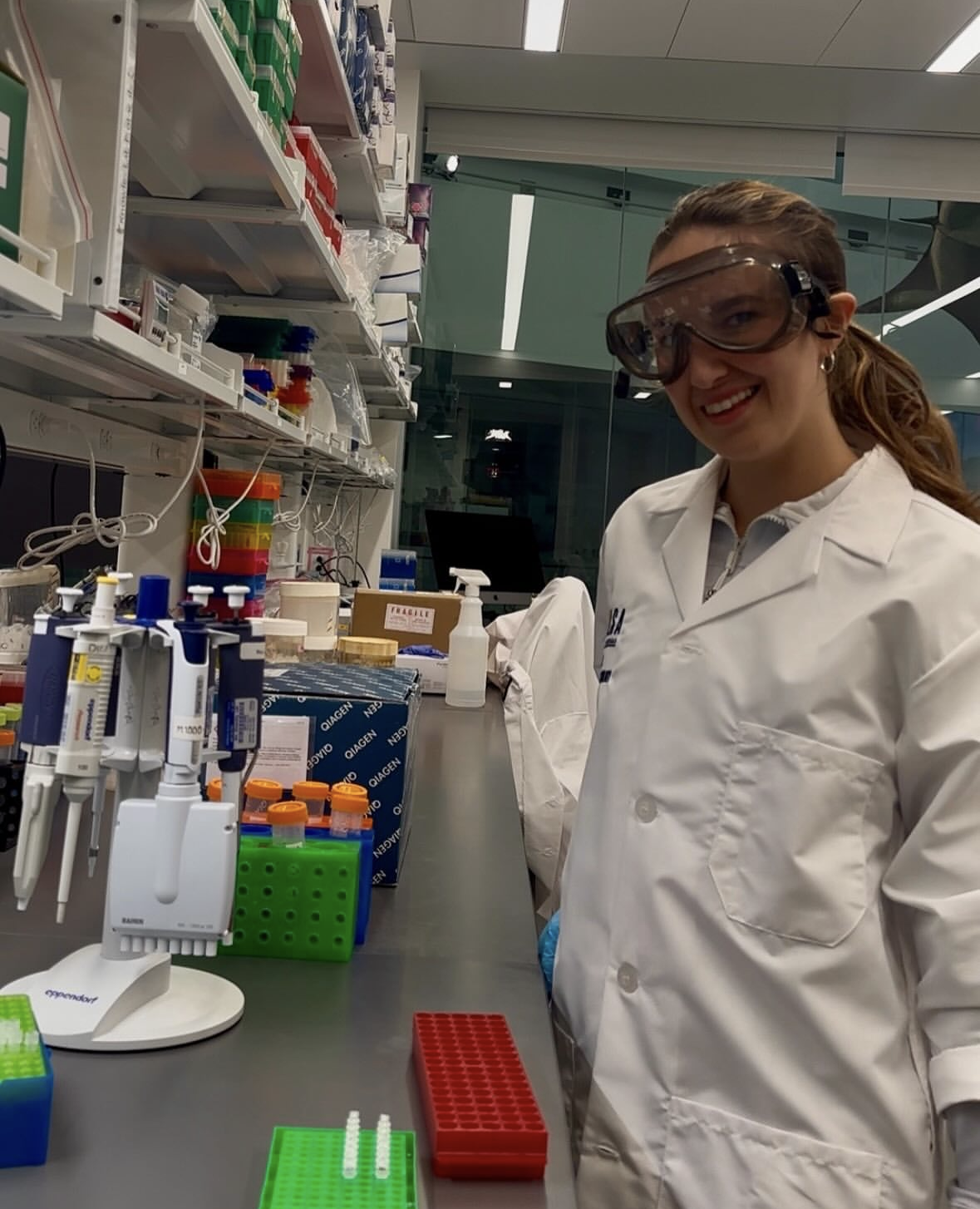
Riley has always had a passion for science. This page shows the full arc—from early fascination to substantive, real contributions today—across disease ecology, antimicrobial resistance, and translational biotech, with a growing interest in immunology.

What I work on
Scientific questions that connect biology, systems, and real-world health outcomes.
Host–pathogen dynamics
How infection outcomes shift with environment, behavior, and biological tradeoffs.
Antimicrobial resistance
How resistance emerges and persists—across clinical realities and environmental contributors.
Bench → bedside
Where rigorous execution meets constraints, decisions, and patient outcomes.
- Unknowns still matter: we still don’t fully understand essential biological mechanisms.
- Vaccination changed history: proof that innovation can eliminate suffering at population scale.
- Cancer burden is massive: I’m energized by work that equips the immune system to fight disease.
- Biotech is the intersection: where medicine and science become therapies.
Why research?
A statement of purpose—from early wonder to translational work.
My journey into research began with childlike wonder. As a five-year-old, I remember peering through a microscope for the first time, captivated by the intricate patterns and hidden beauty of the natural world.
In college, while working as a veterinary technician, I started noticing a concerning trend: more and more animals were presenting with antibiotic-resistant infections. Those clinical cases became scientific questions—and shaped my honors thesis on environmental contributors to antibiotic resistance using Daphnia microbiomes.
This is where I found my passion for translational research. I’m most fulfilled when I use science not only to understand the world, but to improve it—where rigorous work in a lab can become relief, time, and hope for real people.
Publications & presentations
Peer-reviewed work spanning host–parasite dynamics, temperature-mediated outcomes, and transgenerational effects.
- Honors Thesis: Antibiotic Resistance of Daphnia Microbiomes Across Different Catchment Types — Undergraduate Poster Session, University of Michigan (Apr 2025)
- Dziuba, M.K., K.M. McIntire, K. Seto, E. Davenport, R.N. Jaye, et al. (2024). Ordospora pajunii phylogeny/morphology/virulence/host range. mBio. https://doi.org/10.1128/mbio.00582-24
- Sun, S.-J., M.K. Dziuba, R. Jaye, & M.A. Duffy. (2023). Transgenerational plasticity response to elevated temperature and parasitism. Ecology and Evolution. https://doi.org/10.1002/ece3.9767
- Sun, S.-J., M.K. Dziuba, R. Jaye, & M.A. Duffy. (2023). Temperature modifies trait-mediated infection outcomes in Daphnia–fungal parasite system. Phil. Trans. R. Soc. B. https://doi.org/10.1098/rstb.2022.0009
- Sun, S.-J., M.K. Dziuba, K.M. McIntire, R. Jaye, & M.A. Duffy. (2022). Transgenerational plasticity alters parasite fitness in changing environments. Parasitology. https://doi.org/10.1017/S0031182022001056
- Dziuba, M.K., R.N. Jaye, M.A. Duffy, et al. (2024). Microsporidian coinfection reduces fitness of a fungal pathogen due to rapid host mortality. mBio. https://doi.org/10.1128/mbio.00583-24